
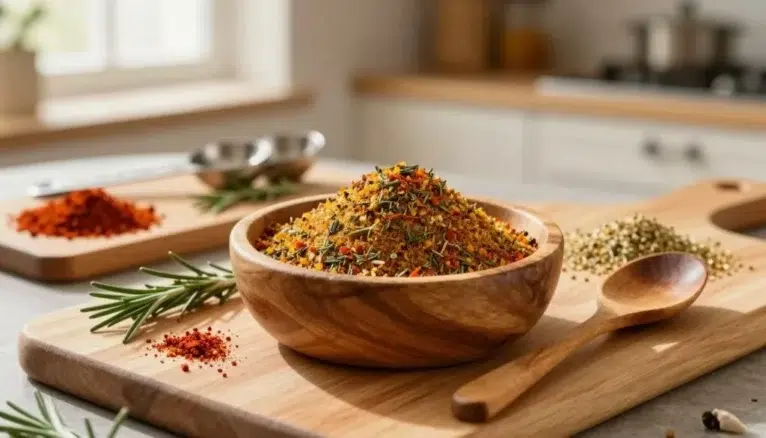
Looking for a simple way to make your Thanksgiving turkey special? A homemade seasoning mix can add depth and warmth. It’s perfect for roasted or smoked birds.
With just 5 pantry staples, you can make a delicious spice blend. It’s great for the holidays. You can use it for roasting, smoking, or even frying your turkey.
By making your own seasoning blend, you skip preservatives and additives. Plus, you can adjust the flavors to your liking.
Table of Contents
Why the Right Seasoning Makes All the Difference
A perfectly seasoned turkey can be the highlight of your holiday meal. It leaves your guests eager for more. The right blend of spices and herbs can enhance the turkey’s natural flavor, creating a memorable dining experience.
The Science Behind Flavor Development
Flavor development in turkey is complex. It involves seasonings, heat, and moisture. When you apply the best seasoning for turkey, you’re not just adding flavor. You’re also improving the aroma and texture.
The science behind it is fascinating. It involves breaking down proteins and caramelizing sugars. This results in a rich, savory flavor.
Using a flavorful turkey rub can help. it keeps the inside juicy and tender but crusty on the outside.
Common Mistakes in Turkey Seasoning
One common mistake is using too little or too much seasoning. Finding the right balance is key. This avoids overpowering the turkey’s natural flavor.
Another mistake is not distributing the seasoning evenly. This can lead to some areas being over-seasoned while others are under-seasoned.
- Using pre-mixed seasoning blends that contain high amounts of salt or sugar.
- Not adjusting the seasoning according to the size and type of turkey.
- Seasoning the turkey too early or too late in the cooking process.
By avoiding these mistakes and using the right savory turkey spices, you can achieve a perfectly seasoned turkey. It will impress your guests.
Essential Ingredients for a Perfect Turkey Seasoning
A great turkey seasoning starts with a few key ingredients. These work together to make your turkey taste amazing. Knowing how each part adds flavor is key.
Base Spices Every Turkey Needs
Salt is the first must-have for turkey seasoning. It boosts the flavor, making other spices stand out. Black Pepper adds a bit of heat and a unique taste. Together, they form the base of most seasonings.
- Salt: Enhances overall flavor
- Black Pepper: Adds moderate heat and pungency
Optional Flavor Enhancers
You can also add special touches to your seasoning. Paprika brings a smoky flavor, garlic powder adds a savory taste, and onion powder adds a sweet hint. These can make your seasoning unique and delicious.

Fresh vs. Dried Herbs: What Works Best
Choosing between fresh and dried herbs is a common question. Fresh herbs give a bright taste, while dried herbs are more intense and last longer. For turkey seasoning, dried herbs like thyme, rosemary, and sage are often best. But fresh herbs can add a lively flavor if you have them.
“The use of herbs in cooking is an art that requires a deep understanding of how different herbs interact with various ingredients.”
Understanding the essential ingredients helps you make a homemade turkey seasoning that’s both fragrant and tasty.
The Ultimate Turkey Seasoning Recipe to Try
The secret to a mouth-watering traditional turkey seasoning is in its ingredients. A few key spices can make a quick turkey seasoning blend that makes your holiday meal special.

Ingredient Measurements and Proportions
To make this traditional turkey seasoning, you’ll need:
- 2 tablespoons ground cumin
- 1 tablespoon paprika
- 1 tablespoon garlic powder
- 1 tablespoon onion powder
- 1 teaspoon dried thyme
- 1 teaspoon dried sage
- Salt and pepper to taste
These ingredients are the base for your quick turkey seasoning blend. You can tweak the amounts to match your taste.
Step-by-Step Mixing Instructions
Mixing your traditional turkey seasoning is easy:
- In a small bowl, mix the ground cumin, paprika, garlic powder, onion powder, thyme, and sage.
- Stir until everything is well mixed.
- Add salt and pepper to taste.
As you mix, enjoy the smell of the spices coming together.
Storage and Shelf Life Guidelines
To keep your quick turkey seasoning blend fresh, store it in an airtight container. Keep it in a cool, dry place. It stays good for up to 6 months.
With these easy steps, you can make a tasty traditional turkey seasoning for your holiday meals.
How to Apply Your Seasoning for Maximum Flavor
The secret to a flavorful turkey is not just the seasoning mix. It’s also how you apply it. To get the perfect flavor, you need to pick the right application method. There are a few ways to apply your delicious thanksgiving turkey seasoning, each with its own benefits.
Dry Rub Application Technique
A dry rub is a simple way to season your turkey. To use a dry rub, sprinkle the seasoning mix all over the turkey. Make sure to cover the top, bottom, under the skin, and inside the cavity. Rub the seasoning into the meat with your hands to ensure it’s evenly coated.
Brining with Your Seasoning Mix
You can make the brine better by adding your homemade turkey seasoning mix. To do this, mix your seasoning with the brine ingredients (salt, water, and any other desired flavorings). Give the turkey time to soak, either for a few hours or overnight. This method adds moisture and flavor to the turkey.
Timing: When to Season Your Turkey
Timing is key when seasoning your turkey. For a dry rub, apply the seasoning at least 24 hours before cooking. If you’re brining, season the turkey during the brining process. Here are some timing tips:
- Apply dry rub 24 hours before cooking.
- Brine with seasoning mix several hours or overnight before cooking.
- For both methods, pat the turkey dry before cooking to promote even browning.
Seasoning Variations for Different Flavor Profiles
Try different seasoning blends to take your turkey to the next level. By changing your turkey seasoning recipe, you can get many flavors for any event or taste.
Let’s look at four seasoning variations that can make your turkey a true masterpiece.
Herb-Forward Mediterranean Blend
For a Mediterranean flavor, mix oregano, thyme, rosemary, and a bit of lemon zest. This flavorful turkey rub will make you feel like you’re in the Mediterranean.
Spicy Southwestern Mix
Give your turkey a spicy twist with chili powder, cumin, smoked paprika, and a bit of cayenne pepper. It’s great for those who love strong tastes.
Sweet and Savory Maple Blend
Try a mix of maple syrup powder, sage, black pepper, and a bit of garlic powder for a sweet and savory taste. Adding 1 tablespoon of brown sugar can make it even better, like a dry pork rub.
Classic Thanksgiving Flavors
Go traditional with sage, thyme, black pepper, and a hint of nutmeg. This turkey seasoning recipe is sure to be a hit with your family.
| Seasoning Variation | Key Ingredients | Flavor Profile |
|---|---|---|
| Herb-Forward Mediterranean Blend | Oregano, thyme, rosemary, lemon zest | Bright, herby |
| Spicy Southwestern Mix | Chili powder, cumin, smoked paprika, cayenne pepper | Spicy, smoky |
| Sweet and Savory Maple Blend | Maple syrup powder, sage, black pepper, garlic powder | Sweet, savory |
| Classic Thanksgiving Flavors | Sage, thyme, black pepper, nutmeg | Traditional, comforting |

Troubleshooting Common Turkey Seasoning Issues
Getting the perfect flavor with your best seasoning for turkey is simpler than you might think. Even with a great homemade turkey seasoning, problems like bland taste, too much seasoning, and uneven spread can happen. Luckily, these issues have easy fixes.
Dealing with Bland Flavor
If your turkey seems bland, it might not have enough seasoning or use old spices. To solve this, add more of your homemade turkey seasoning mix under the skin or inside the turkey. Adding a little cayenne pepper or red pepper flakes can also add a nice spicy touch.
Fixing Over-Seasoned Turkey
Too much seasoning can make your turkey taste too salty or strong. To balance it, add sour cream or yogurt to your stuffing or gravy. Or, serve the turkey with a mild, unsalted sauce to tone down the flavor.
Ensuring Even Distribution
To make sure your best seasoning for turkey spreads evenly, rub the mix all over the turkey. Brining the turkey before seasoning can also help with even flavor.
By using these tips, you can solve common turkey seasoning problems and get a tasty turkey. For more seasoning mix ideas, check out our section on seasoning variations.
Conclusion
Now you know how to make the perfect easy turkey seasoning mix. Use savory turkey spices to add depth and warmth to your dishes.
Try different flavors and techniques to find your unique style. Whether you love classic Thanksgiving tastes or want to explore Mediterranean or Southwestern flavors, there’s a lot to try.
Mastering homemade turkey seasoning can elevate your cooking. Don’t hesitate to mix and match spices and herbs. With practice, you’ll make dishes that wow everyone.